
Ad-hoc approvals create compliance gaps
Structured approval workflows, complete audit trails, and policy enforcement for every AI tool.
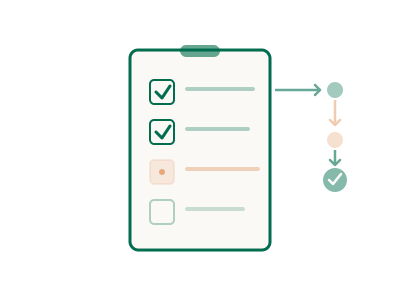
Ad-hoc approvals create compliance gaps
Employees sign up for AI tools without asking permission
IT, legal, and security should all review but coordination is manual
No audit trail of who approved what and why
Regulators will ask for proof of governance process
How Review works
Request
Employees submit AI tool requests with business justification
Review
Auto-routing to IT, legal, security - everyone reviews in parallel
Approve
Documented decisions with complete audit trail for compliance
Key Benefits
Consistent process
Every AI tool goes through the same structured evaluation.
Multi-stakeholder review
Route reviews to IT, security, legal, and business owners as needed.
Complete audit trail
Full documentation of every decision for compliance and regulators.
Automated triage
Low-risk tools can be auto-approved based on policy rules.
Feature illustration placeholder
Who Uses This
Standardizing AI tool approval
Documenting AI governance for regulators
Getting AI tools approved quickly
From chaos to process
Most organizations have no formal process for AI tool adoption. Someone in marketing discovers a new tool. They sign up. They start using it. IT finds out months later.
This creates inconsistency, risk, and compliance gaps. EU AI Act requires documented governance. Ad-hoc approaches don’t qualify.
Structured review workflows
Armadillo Review provides a framework for consistent AI governance:
Policy Definition Define clear criteria for AI tool approval:
- Required security certifications
- Data handling requirements
- Compliance standards
- Cost thresholds
- Business justification requirements
Triage Rules Not every tool needs full review. Configure rules to:
- Auto-approve low-risk, common tools
- Fast-track tools already approved for other teams
- Require full review for high-risk categories
Multi-Stakeholder Review Route reviews to the right people:
- IT Security for security assessment
- Legal for contract and compliance review
- Finance for cost approval
- Business owner for business case validation
Decision Documentation Every decision is recorded:
- Who requested the tool and why
- Who reviewed and when
- What concerns were raised
- Why it was approved or rejected
- Any conditions or restrictions
Audit-ready documentation
When regulators ask about your AI governance:
- Complete inventory: Every tool, approved or not
- Decision history: Full trail of every review
- Policy documentation: Clear criteria and processes
- Exception records: How edge cases were handled
This documentation meets EU AI Act requirements for AI governance.
User-friendly process
Good governance shouldn’t block productivity. Review is designed to be fast:
- Clear timelines: Users know when to expect decisions
- Transparent status: Real-time visibility into review progress
- Escalation paths: Clear process for urgent needs
- Appeal process: Fair handling of rejections
The goal is governance that enables safe AI adoption, not governance that blocks progress.